Top 10 Programming Languages for Jagged Arrays
I am a Digital Marketer and Content Marketing Specialist, I enjoy technical and non-technical writing. I enjoy learning something new. My passion and urge to gain new insights into lifestyle, Education, and technology have led me to Uncodemy. Uncodemy is the best IT course training provider. They also provide many it courses like python, java, and best data science course in Delhi and all location in India.
Introduction:
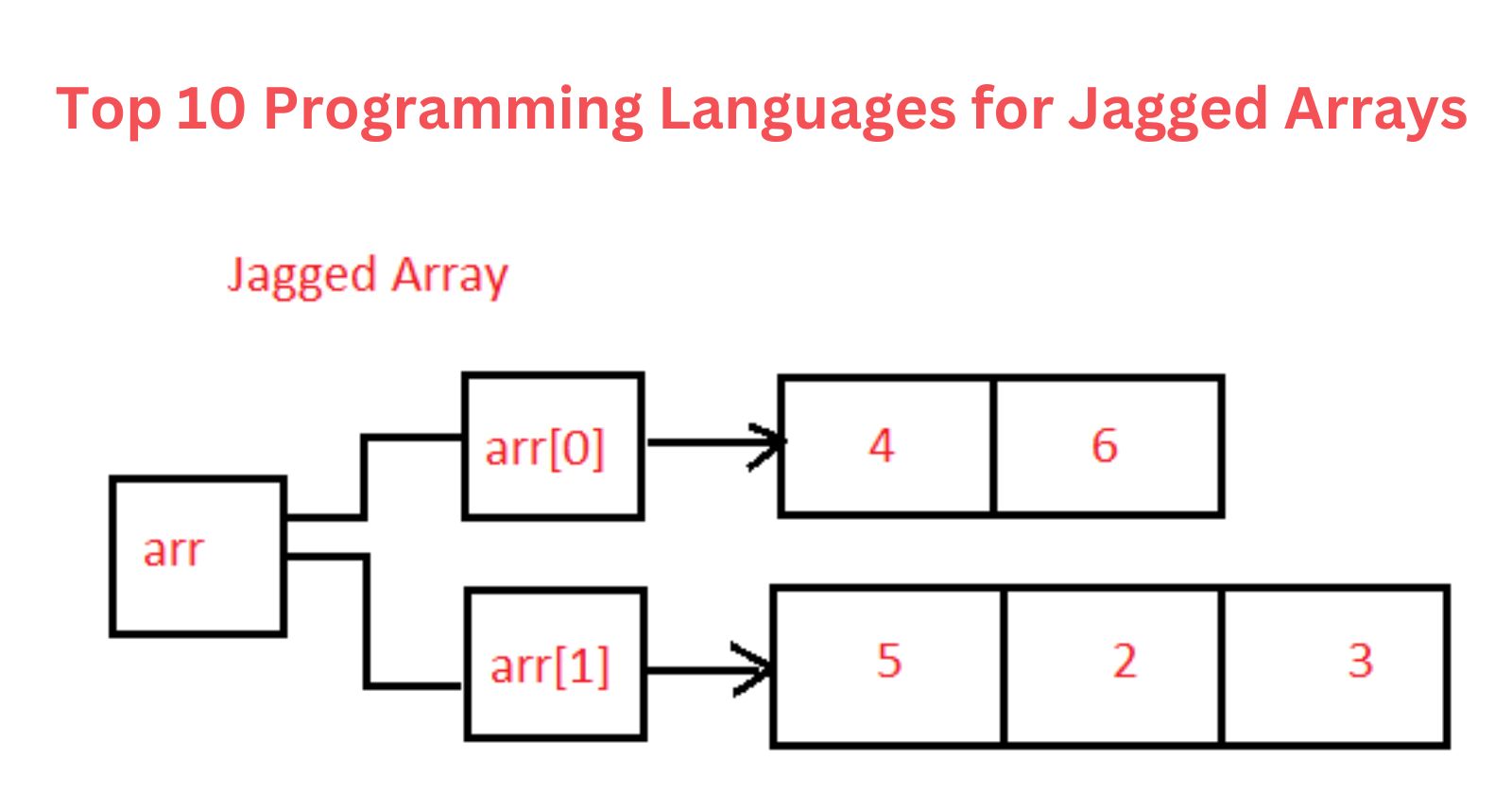
Jagged arrays, also known as ragged arrays, are arrays whose elements are arrays themselves, but of varying sizes. They find extensive use in various programming tasks, from data processing to image manipulation. In this article, we'll explore the top 10 programming languages for working with jagged arrays, discussing their features, advantages, and use cases.
Python:
Python is renowned for its simplicity and readability, making it an excellent choice for handling jagged arrays. With libraries like NumPy and Pandas, Python offers powerful tools for efficient manipulation of multidimensional arrays, including jagged arrays. Its extensive ecosystem and straightforward syntax make it a favorite among data scientists and researchers.
Java:
Java's robustness and versatility extend to handling jagged arrays with ease. Its object-oriented nature allows for the creation of complex data structures, including arrays of arrays. Additionally, Java's standard libraries provide comprehensive support for array operations, ensuring efficient handling of jagged arrays in various applications. If you're interested in mastering Java, consider enrolling in an Offline or Online Java course in Chandigarh, Delhi, Ghaziabad, or other nearby cities.
C#:
As a part of the .NET framework, C# offers seamless integration with arrays, including jagged arrays. Its syntax is similar to Java, making it easy for Java developers to transition. With LINQ (Language Integrated Query), C# provides powerful querying capabilities, enhancing the manipulation of jagged arrays in a concise and readable manner.
JavaScript:
JavaScript's flexibility and ubiquity make it a compelling choice for working with jagged arrays, particularly in web development. Its dynamic nature allows for the creation and manipulation of arrays of varying lengths effortlessly. With frameworks like React and Angular, JavaScript facilitates the efficient rendering and management of jagged arrays in web applications.
C++:
C++ offers high performance and low-level control, making it suitable for handling complex data structures like jagged arrays. Its array and pointer manipulation capabilities enable fine-grained control over memory allocation and management, essential for efficient handling of large jagged arrays in resource-constrained environments.
R:
R is specifically designed for statistical computing and graphics, making it ideal for handling jagged arrays in data analysis tasks. With packages like plyr and dplyr, R provides intuitive functions for working with data frames and arrays, including jagged arrays. Its extensive plotting capabilities further enhance the visualization of jagged array data.
Swift:
Swift's modern syntax and performance make it well-suited for handling jagged arrays in iOS and macOS development. With features like optionals and generics, Swift ensures type safety and efficient memory management when working with complex data structures like jagged arrays. Its interoperability with Objective-C further extends its utility in existing codebases.
Scala:
Scala combines object-oriented and functional programming paradigms, offering expressive and concise syntax for working with jagged arrays. Its support for immutable data structures ensures thread safety and facilitates parallel processing of jagged arrays. With libraries like Breeze, Scala provides efficient numerical computing capabilities for handling large-scale jagged arrays.
Go:
Go's simplicity and concurrency support make it a compelling choice for handling jagged arrays in concurrent applications. Its lightweight goroutines enable efficient parallel processing of jagged arrays, enhancing performance in multi-threaded environments. With built-in support for slices, Go simplifies the creation and manipulation of jagged arrays without sacrificing performance.
Haskell:
Haskell's strong type system and purity make it suitable for handling jagged arrays in functional programming contexts. Its lazy evaluation enables efficient processing of large jagged arrays without unnecessary computation. With libraries like vector, Haskell provides high-performance data structures and algorithms for working with jagged arrays in a purely functional manner.
Conclusion:
Jagged arrays are versatile data structures with diverse applications across various domains, from scientific computing to web development. By leveraging the capabilities of these top 10 programming languages, developers can efficiently manipulate and process jagged arrays to meet the demands of modern software development. Whether it's data analysis, image processing, or concurrent programming, there's a programming language tailored to handle jagged arrays effectively, empowering developers to tackle complex problems with confidence.


