What are the advantages of using socket programming?
I am a Digital Marketer and Content Marketing Specialist, I enjoy technical and non-technical writing. I enjoy learning something new. My passion and urge to gain new insights into lifestyle, Education, and technology have led me to Uncodemy. Uncodemy is the best IT course training provider. They also provide many it courses like python, java, and best data science course in Delhi and all location in India.
Introduction
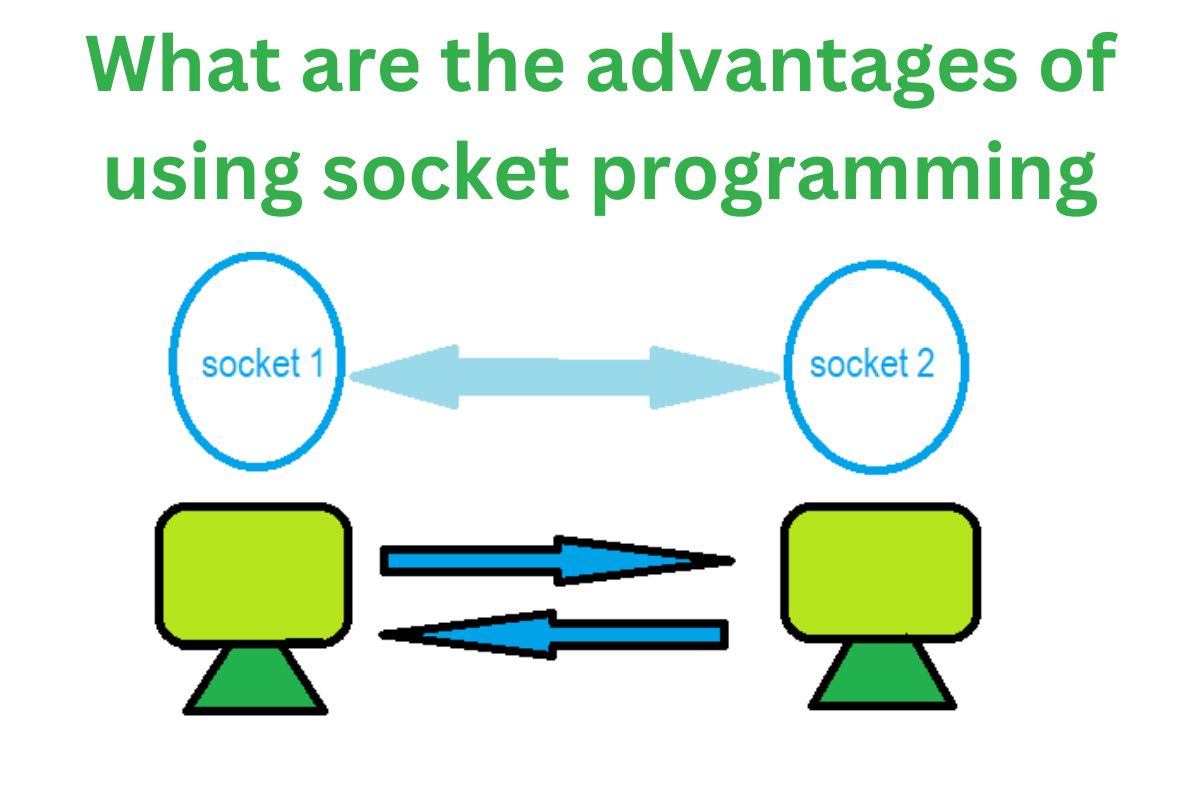
Socket programming is a cornerstone of network communications, enabling computers to connect and communicate over a network. It involves the use of sockets—endpoints for sending and receiving data across a network. The technology plays a vital role in a myriad of applications, from simple client-server models to complex distributed systems. Understanding the advantages of socket programming can help developers leverage its full potential to create efficient, scalable, and robust network applications.
Technical Specifications
Socket programming supports various protocols such as TCP (Transmission Control Protocol) and UDP (User Datagram Protocol). TCP is reliable and ensures data delivery in the correct order, making it ideal for applications where accuracy is critical. UDP, on the other hand, is faster but does not guarantee delivery, making it suitable for applications where speed is more important than reliability.
Types of Sockets
Stream Sockets (TCP): Provide reliable, two-way, connection-based byte streams.
Datagram Sockets (UDP): Provide connectionless, unreliable messaging services.
Raw Sockets: Allow direct sending and receiving of IP packets without protocol-specific transport layer formatting.
Applications
Socket programming is used in a wide array of applications, including:
Web Servers and Clients: Facilitates the interaction between web servers and clients.
File Transfer Protocol (FTP): Enables the transfer of files over a network.
Email Services: Powers the transmission of emails between servers.
Remote Login: Allows users to log in to remote systems securely.
Real-Time Gaming: Provides the necessary framework for multiplayer gaming experiences.
Benefits
Improved Communication Efficiency
- Sockets provide a direct communication channel between devices, minimizing latency and maximizing throughput. This is crucial for applications requiring real-time data transmission, such as online gaming, video conferencing, and live streaming.
Scalability
- Socket programming allows the development of scalable applications. By implementing socket multiplexing techniques such as select(), poll(), and epoll(), developers can handle thousands of simultaneous connections efficiently.
Flexibility
- Sockets can be used in various network configurations and support multiple protocols, offering flexibility in designing network applications. Developers can choose between TCP for reliable data transfer and UDP for low-latency communication based on the application's requirements.
Robust Error Handling
- Socket programming provides robust mechanisms for error detection and handling, ensuring the stability and reliability of network applications. This is particularly important in maintaining continuous service in the face of network disruptions.
Challenges and Limitations
Complexity
- Socket programming can be complex, especially for beginners. Managing connections, handling data transmission, and ensuring security require a deep understanding of networking principles.
Security Concerns
- Sockets can be vulnerable to various security threats such as man-in-the-middle attacks, DDoS attacks, and data breaches. Implementing robust security measures, including encryption and authentication, is essential to protect socket-based communications.
Resource Management
- Efficiently managing system resources, such as memory and processing power, is crucial in socket programming. Poor resource management can lead to performance issues and application crashes.
Latest Innovations
Recent advancements in socket programming include:
Asynchronous Sockets: Enhance performance by allowing non-blocking operations.
WebSockets: Enable full-duplex communication channels over a single TCP connection, ideal for real-time web applications.
Secure Sockets Layer (SSL) and Transport Layer Security (TLS): Provide enhanced security for socket communications.
Future Prospects
The future of socket programming looks promising with the ongoing development of high-speed networks and improved security protocols. Innovations such as 5G technology and quantum cryptography are expected to further enhance the performance and security of socket-based applications.
Comparative Analysis
Compared to other communication methods such as HTTP and WebRTC, socket programming offers distinct advantages in terms of efficiency, flexibility, and control. While HTTP is stateless and ideal for request-response communication, sockets provide a persistent connection suitable for continuous data exchange.
Conclusion
Socket programming remains a fundamental technology in the realm of network communications. Its advantages in terms of efficiency, scalability, flexibility, and robust error handling make it indispensable for developing high-performance network applications. Despite its complexities and challenges, the ongoing advancements and future prospects in socket programming continue to drive innovation and improvements in various industries.Exploring in the Best Java Training in Chandigarh, Delhi, Ghaziabad, Gurgaon, and other nearby cities to gain comprehensive knowledge and practical skills in Java programming, including socket programming. With expert guidance and hands-on experience, you can unlock new opportunities in the dynamic field of network programming.
FAQs on the Advantages of Using Socket Programming
1. What is socket programming?
- Socket programming is a computer networking technique that allows communication between devices over a network. It involves the use of sockets, which are endpoints for sending and receiving data.
2. What are the main advantages of using socket programming?
- The advantages of socket programming include improved communication efficiency, scalability, flexibility, robust error handling, and support for various protocols such as TCP and UDP.
3. How does socket programming improve communication efficiency?
- Socket programming provides a direct communication channel between devices, minimizing latency and maximizing throughput. This is essential for applications requiring real-time data transmission.
4. Can socket programming handle large-scale applications?
- Yes, socket programming is highly scalable. By implementing socket multiplexing techniques, developers can efficiently handle thousands of simultaneous connections, making it suitable for large-scale applications.


